
How To Fix Rhomboid Pain
Are you dealing with a nagging discomfort in between your shoulder blade and your spine? No matter how many stretches you do, or how much time you spend foam rolling it, does it still persist? Pain in this area often gets labeled as a rhomboid issue because it is a relatively superficial muscle that you can appreciate from any anatomy chart. However, how to fix rhomboid pain sometimes may actually have little to do with the rhomboids. In this article, you'll learn the ultimate secret of how to fix rhomboid pain by taking a look at a very specific movement!
Endless Nagging Between Your Shoulder Blades?
If there was only one movement assessment I had to pick when it comes to evaluating interscapular pain, I'm going to look at thoracic rotation mobility. Be sure to watch the full video to learn not just how to assess, but also how to improve thoracic rotation mobility and potentially fix rhomboid pain!
Manage your Rhomboid Pain With Thoracic Mobility!
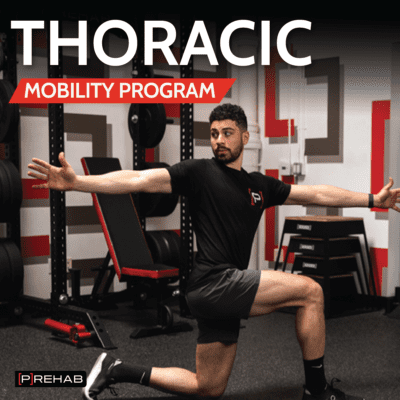
Poor thoracic rotation mobility can wreak havoc on the body and can definitely lead to pain and discomfort in the rhomboid region. Poor thoracic rotation mobility is often coupled with poor scapular mobility/stability, which can only contribute to more issues like neck pain or shoulder pain! I have found that simply improving thoracic rotation mobility can improve interscapular discomfort. Yet, the average person is bound to be stiff and limited in this region and the rest of their mid-back! We can blame 21st-century workplaces and lifestyle habits, but the good thing is the thoracic spine and mid-back region respond extremely well to the right dose of exercise. We have a proven program to improve your thoracic spine mobility designed to get you moving better and feeling better! Learn more HERE.
Understanding Interscapular Pain & Anatomy
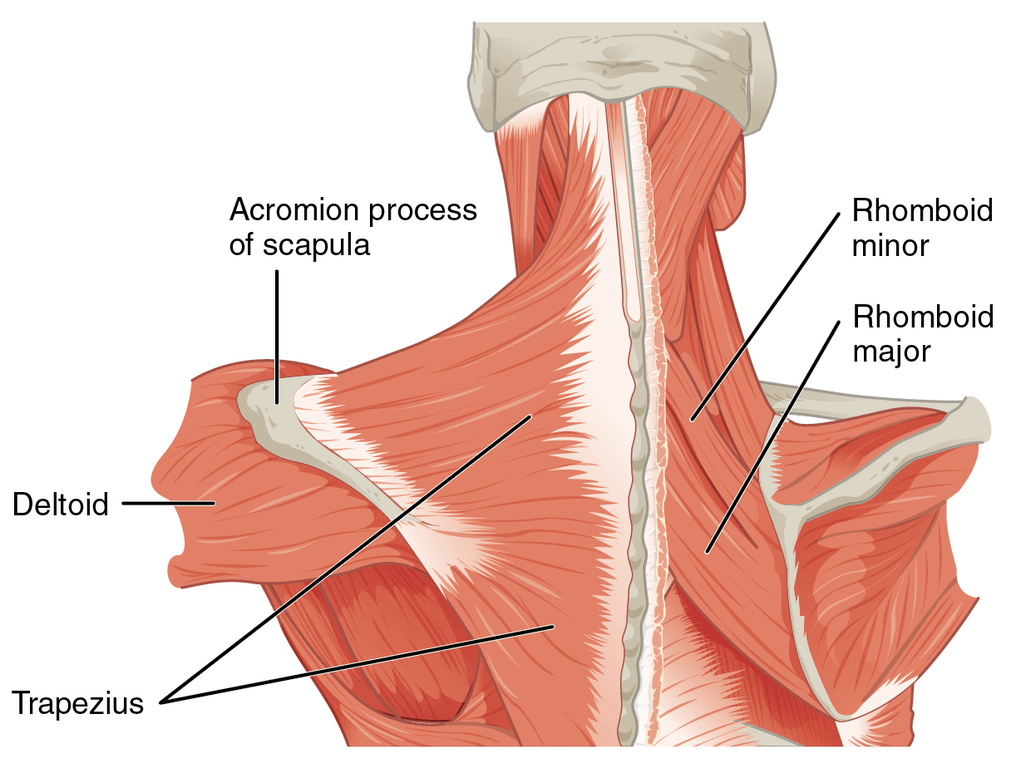 From Wikimedia
Rhomboid pain is labeled as pain in between your shoulder blade and your spine (interscapular pain) that can even refer up to the base of your neck or down the middle of your back. It is often described as a nagging dull ache or pain, pressure, knifelike, pulling, or even a burning sensation (is that really rhomboid pain? Food for thought). You'll often find people dealing with discomfort in this area wanting to fidget around in an effort to feel better - moving their head and neck around trying to stretch, rounding their shoulders, squeezing their shoulder blades back, or twisting their upper back, you name it. The occasional soreness in this region is nothing to be concerned about, especially if you did a hard upper back workout or carried a backpack for a long time. However, dealing with constant discomfort or pressure in this area can become a real nuisance.
Speaking of trying to 'loosen' up the muscles around the shoulder blades, some people even try foam rolling. Should you even be doing this? What does foam rolling actually do physiologically? Listen to the podcast below to find out.
LISTEN: SHOULD YOU BE FOAM ROLLING?
Trigger Points: What Are They and Do They Exist?
For some people with chronic cases of mid-scapular pain, they may have been told they're dealing with Myofascial Pain Syndrome (MPS), which is typically a diagnosis of exclusion (meaning everything else has been ruled OUT). MPS is tricky and complicated because it can include a wide variety of symptoms, but it is often labeled as symptoms that cause pain in different parts of the body. Specifically, people will say they have 'trigger points' in their muscles, which are really sore and sensitive to touch and pressure. For some, the rhomboid region can get really sensitive and feel this way (1)!
A forewarning, 'trigger points' is a sensitive subject amongst clinicians (pun intended) and can cause a ton of heated debate about whether they are real or not and if we can actually palpate them because we still don't fully understand what they are. However, we cannot and should not deny people from acknowledging what they're feeling and how they're trying to describe and communicate that to us! There also may be a connection to pain and discomfort in the rhomboid region when doing continuous computer work, here is an interesting read on it (2). With that being said, we wanted to set the record straight on posture and computer work.
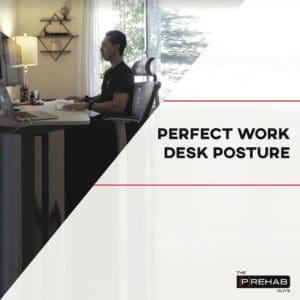
If you believe your rhomboid issue is related to your posture and your computer work, definitely check out the read below.
READ: THE PERFECT WORKING DESK POSTURE
What Else Can Contribute To This Pain Between Your Shoulder Blades?
Just because you're dealing with discomfort in between your shoulder blade and your spine doesn't mean we have to point the finger at the rhomboids every time! To fix rhomboid pain, we need to take a look at and consider all of the other anatomical structures in the area. This includes...
- Thoracic spine
- Ribs
- Scapulothoracic joint & shoulder joint posture/alignment
- Cervical and thoracic nerves
- Cervical & thoracic discs
- Scapula nerves (dorsal scapular nerve entrapment)
- Paraspinal, Trapezius, Pecs, & Serratus Anterior muscles
This list can seem overwhelming, but it is definitely worthwhile to consider all potential contributing anatomical structures so that nothing is missed (especially in chronic cases that have failed targeted treatments) (3). However, we know improving thoracic spine mobility can definitely help with interscapular pain! Below you will find some great exercises to get you started.
Exercise Promoting Thoracic Rotation Mobility
Open Books With Pillow Support

Sample Thoracic Spine Mobility Overhaul [P]Rehab Program Exercise
Rhomboid Stretches
In efforts to fix rhomboid pain, you can't rule out the rhomboids after all! Below you'll find our favorite rhomboid stretch that hits the muscles like no other!
Doorway Stretch

Sample Thoracic Spine Mobility Overhaul [P]Rehab Program Exercise
Fix Rhomboid Pain With Serratus Anterior Activation Exercises
When speaking of muscle actions, the rhomboids are responsible for scapular elevation and downward rotation. The ideal scapula position is not excessive downward rotation, however, this is not uncommon and it can cause mid-back, neck, and even shoulder issues. An important antagonist of the rhomboids is the serratus anterior, which according to some schools of thought has a myofascial connection to the rhomboids.
Along with improving thoracic rotation mobility and rhomboid stretching, we always give serratus anterior exercises for optimal scapula mobility and stability! Below you will find one of our favorites to help fix rhomboid pain.
Shoulder Flexion On Wall With Foam Roller

Get Rid Of That Pain Between Your Shoulder Blades For Good!
The thoracic spine is often a missing culprit in the realm of exercise; however, it plays such a crucial role in other areas of our body working at 100%. Particularly, our neck, shoulders, and believe it or not, even our low back, all require adequate mobility from the mid-back! This program will teach you how to maximize mobility throughout your mid back that not only will help relieve that nagging pain between your shoulder blades, but also optimize your movement experience with everyday activities!
Closing Thoughts
Interscapular pain can be a real nuisance, however, you now have a better idea of what can be contributing, what to assess (thoracic rotation), and what exercises to follow up to ultimately fix rhomboid pain! If you are looking for extra guidance and the ability to communicate with us, definitely check out our Neck & Mid Back [P]Rehab Program!
References
- Desai MJ, Saini V, Saini S. Myofascial Pain Syndrome: A Treatment Review. Pain and Therapy. 2013 June; 2(1): 21-36
- Yoo WG: Changes in pressure pain threshold of the upper trapezius, levator scapular and rhomboid muscles during continuous computer work. J Phys Ther Sci, 2013, 25: 1021–1022.
- Sultan HE, Younis El-tantawi GA. Role of dorsal scapular nerve entrapment in unilateral interscapular pain. Arch Phys Med Rehabil. 2013;94:1118-1125.
About The Author
Craig Lindell, PT, DPT, CSCS
[P]rehab Co-Founder & Chief Content Officer
 Craig is a South Jersey native & Penn State Kinesiology Alumni. When the opportunity came, Craig packed his bags and drove to California to pursue his Doctorate in Physical Therapy from the University of Southern California. With [P]rehab, Craig oversees all digital content creation and multi-channel publication that reaches millions of people on a weekly basis. As a PT, Craig has a wide array of experience from working with various neurological conditions to working with collegiate & professional athletes across the Big Five in North American sports. Experiencing physical therapy first-hand as a soccer player in high school, Craig has a passion & special interest in adolescent athletic development working with young athletes to overcome injuries. In his spare time, Craig enjoys exercising, playing golfing, hiking, traveling, watching Philly sports, and spending quality time with his family.