
Introduction to Functional Range Conditioning (FRC)
Functional Range Conditioning (FRC) became very popular in the fitness, rehab, and sports medicine world a couple of years ago and it is here to stay as it has many applicable uses. FRC focuses on improving mobility. Mobility, in an FRC sense, is defined as strength and control in order to expand upon usable ranges of motion, articular resilience (i.e. load-bearing capacity), and overall joint health. Adding FRC principles into your training and prehab routine can be a huge game-changer! This article will provide you with an intro to FRC principles provided with exercise examples that we have included in a variety of our prehab programs.
Understanding Functional Range Conditioning
We start with the FRC principle: controlled articular rotations. This is a great intro to FRC, the concept of CARs is that the joint capsule relays multidirectional and rotatory information to the central nervous system (CNS). For this reason, the rotatory component of CARs is imperative and should not be overlooked. The mechanoreceptors that innervate our joint capsules provide the CNS with afferent feedback carrying signals that pertain to what is going on within the joint. More stimulus to the mechanoreceptors means more afferent feedback to the CNS, which causes more efferent output back to the musculoskeletal system, ultimately inducing more control.
Intro To FRC: Controlled Articular Rotations (CARs)
In these videos, I am performing CARs focused at my neck, shoulder, and hip. I am actively moving through my range and utilizing the available range of motion under muscular and neurological control instead of simply holding a static stretch without active control. Each time I perform CARs, I try to create a larger "circle" to improve control on the outer limits of my range, thus enhancing the adaptability of my tissues and aiding in joint health, integrity, and protection. Also, to increase the intensity of this exercise, I can increase the resistance through the air from 0% to 100%. This will help create more tension throughout the body to ultimately improve muscular and neurological control. This is a great intro to FRC and an excellent starting point!
Gain Exposure To FRC Exercises And More With Our Hip Mobility Overhaul!
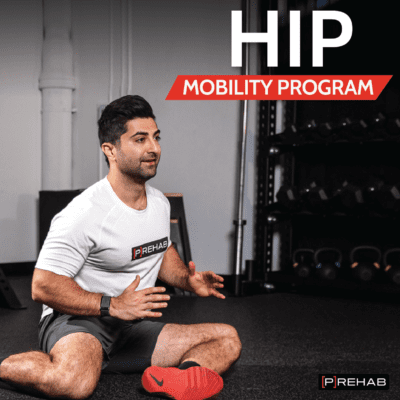
The Hip Mobility Overhaul [P]Rehab Program is the ultimate resource for those looking to improve their hip mobility. The natural design of the hip allows it to serve as the key to foundational movement. If we begin to lose access to that mobility we are missing out on significant movement potential and increase risk of injury at the hip along with areas above and below such as the low back, knee, and our feet. With this program you’ll regain access to your hip mobility and enjoy a life with limitless movement! Learn more HERE.
Intro To FRC: PAILs & RAILs
These videos emphasize FRC principles: progressive (PAIL) and regressive angular isometric loading (RAIL). Building off of the intro to FRC with CARs, these techniques help teach the central nervous system (CNS) how to control and function in newly acquired ranges. Utilizing isometric contraction teaches the nervous system to have active control over a particular range (i.e. shortened or lengthened positions). These techniques help expand the available range of motion at any given joint. In addition, PAILs and RAILs will help build strength and tissue adaptation in both the shortened and lengthened ranges of motion. A key component while performing PAILs and RAILs is to irradiate (create tension) throughout the body.
In order to perform PAILs and RAILs, statically hold a 90-90 hip position for 2 minutes. After the 2 minutes, I irradiate throughout my entire body and perform a PAIL contraction with my right leg by driving the leg into the ground, ramping tension up to 100% effort by the end of the 10-second count. After the PAIL contraction I reverse into a RAIL contraction--again, ramping tension up to 100% effort within the 10-second count--whereby I actively bring myself further into a new range. After completing that cycle (Hold position: 2 minutes, then PAIL/RAIL contraction) I am in a newly acquired range and I repeat the sequence. These techniques are very taxing to the body and should be performed with 100% focus!
Lacking Overhead Shoulder Mobility? Find Out How To Assess And Improve It!
Intro To FRC: Passive End Range Holds, Lift Offs, and Hovers
These videos focus on the FRC principles: passive end range holds, passive range liftoffs, and hovers. These techniques help to improve muscular strength, joint resiliency, and muscular and neurological control. The concept of irradiating tension throughout my body remains in the techniques. The first clip is focused on improving my end-range hip flexion strength. I passively bring myself into a particular range of hip flexion and maintain that position actively for a given period of time. I then increase the degree of hip flexion and perform the same technique.
The second technique is passive end range lift offs out of a 90-90 hip position, which focuses on improving hip internal rotation, specifically on the left side in this clip. I irradiate tension throughout the entire body to lift off the ground and hold for a period of time to improve neural drive and strength in the given range. Lastly, is Hovers. Implementing tools such as yoga blocks or shoes to help you perform hovers is totally up to you. In this clip, I start in a 90-90 hip position with the focus being on my right leg. I actively lift my front side leg and bring it through a particular range of motion hovering over an object such as a towel. This enhances neural and muscular strength throughout the entire exercise. These techniques are neurologically taxing if done correctly and cramping is likely to occur. Slowly start implementing FRC principles into everyday practice and optimize your joint resilience, health, and longevity!
READ: HIP IMPINGEMENT AND PHYSICAL THERAPY TREATMENT
Lower Body FRC Exercises
You can be creative with the way you perform FRC exercises, which is one of the many excellent traits about them and why we have added them in our programs! Here we are showing how you can perform FRC exercises in different positions.
Hip CARs - Side Lying, In Flexion

Sample Hip Mobility [P]rehab Program Exercise Video
- HOW: Begin by lying on your side with the leg you want to exercise on top and the lower leg bent on the ground. The knee can be straight out from the hip. The bottom arm can be supporting your head, and the top arm can be bent with your hand on your hip. Keep your hips facing forward parallel to the ground. While keeping the knee straight and parallel to the ground, raise the top leg up and slightly move it forwards in front of you. From here, rotate your foot back and forth to point down to the floor and then up to the sky.
- FEEL: You should feel the hip muscles on the side and front working to rotate the leg and hold it up.
- COMPENSATION: Keep the knee straight, don’t bend it. Don’t let your leg drop down as you rotate your hip.
Quadruped Hip CAR

Start in a quadruped position, then lift one leg up and perform max extension, external rotation, abduction and flexion, Reverse and repeat. See the video for tips. You will feel muscles all around your hip as well as throughout your entire body working with this exercise. Try to isolate motion to your hip joint as best as you can.
Upper Body FRC Exercises
Below are some variations that you can perform for the upper body as well!
Shoulder CARs

- HOW: Standing with your arms at your side, bring one arm up in front of you as high as you can, palm facing in. Once you have your arm as high as you can, rotate your arm around to where your palm is facing out. As you rotate your arm out, rotate your arm and shoulder back until you can’t. At that point, rotate your hand back to the starting position and reverse the motion.
- FEEL: You should feel the muscles in your shoulder working.
- COMPENSATION: Keep your chest facing forward. Don’t twist back towards the moving arm. Slow and controlled motion, this is not about how fast you move your shoulder.
LISTEN: DECREASING RISK OF SHOULDER INJURY IN OVERHEAD LIFTERS
Elbow CARs

HOW: Start with your elbows straight and forearms rotated out with your palms facing up. Bend your elbows as far as you can, while holding this position now rotate your forearms in and palms down, then extend your elbows. Repeat
- FEEL: You will feel your biceps, triceps, and forearm muscles working with this exercise. You may feel a stretch in your upper arm, elbow, and forearm region.
- COMPENSATION: Do not rush the motion, focus on moving through your full ROM
Closing Thoughts
Functional Range Conditioning (FRC) exercises are excellent variations that can be integrated into your exercise routine. Specifically, these exercises are going to help you improve your mobility. Find what works best for you in regards to these exercises and stay consistent! You will find that you make excellent improvements along the way with your overall mobility.
Dealing With Tightness In Your Hips?
The powerhouse of the movement system: the hip. With all of the force it can generate and without purposeful attention, this joint can start to feel pretty stiff. It's a ball and socket joint by design meaning it was made to move in all planes of motion. If you want to optimize your movement system hip mobility is a great choice!
About the Author
Nick Buonforte PT, DPT, CSCS
Nick is a physical therapist, certified strength and conditioning specialist, and owner of DRIVE Physical Therapy and Performance located in northern New Jersey. He has worked at the professional baseball level while completing an affiliation with the San Francisco Giants baseball club. He currently practices physical therapy in addition to sports performance training for athletes, with patients ranging from grade school to the professional level in New Jersey. Dr. Buonforte takes a holistic approach when looking at his athletes/clients in order to create and implement the most effective treatment strategy that is tailored to them and their goals/needs.
website: www.driveptandperformance.com
instagram: @dr.njbuonforte
Click here to learn more about Functional Range Conditioning
Disclaimer - The content here is designed for information & education purposes only and is not intended for medical advice.