
Proper Hamstring Stretching
Stretching after a workout is very common in recovery programs. 'Tight' muscles that are not properly managed could lead to potential muscle imbalances, abnormal movement patterns and compensatory strategies, and even muscle spasms. The hamstrings are responsible for specific muscle actions in different body regions and contribute to many movements that we perform daily! They too can become 'tight' and as a result, can contribute to some of the issues we mentioned earlier. The positive is that there are many different ways to stretch your hamstrings, with individualized variations! However, as with any movement, there are many ways to do it! And some are much more advantageous than others! For starters, proper hamstring stretching does not mean that you should only be feeling a stretch in your foot! And if you are going to stretch your hamstrings, you must know why you are doing so! In this article, we will show you proper hamstring stretching, and how you can implement various techniques as part of your daily routine to keep you moving often and moving well!
What Are The Hamstrings?
The hamstrings are a group of three muscles that include: the biceps femoris (long head), semimembranosus, and semitendinosus. All three muscles of the posterior thigh originate from the ischial tuberosity (sit bone) of the hip and insert into either the tibia or fibula at the knee. The hamstrings flex the knee and extend the hip; thus, to stretch the hamstrings you must do the opposite actions: extend the knee and flex the hip. So if the hamstrings originate at the hip and insert at the knee, should you be feeling a hamstring stretch in your foot, more than likely not.
Hamstring Muscle Anatomy
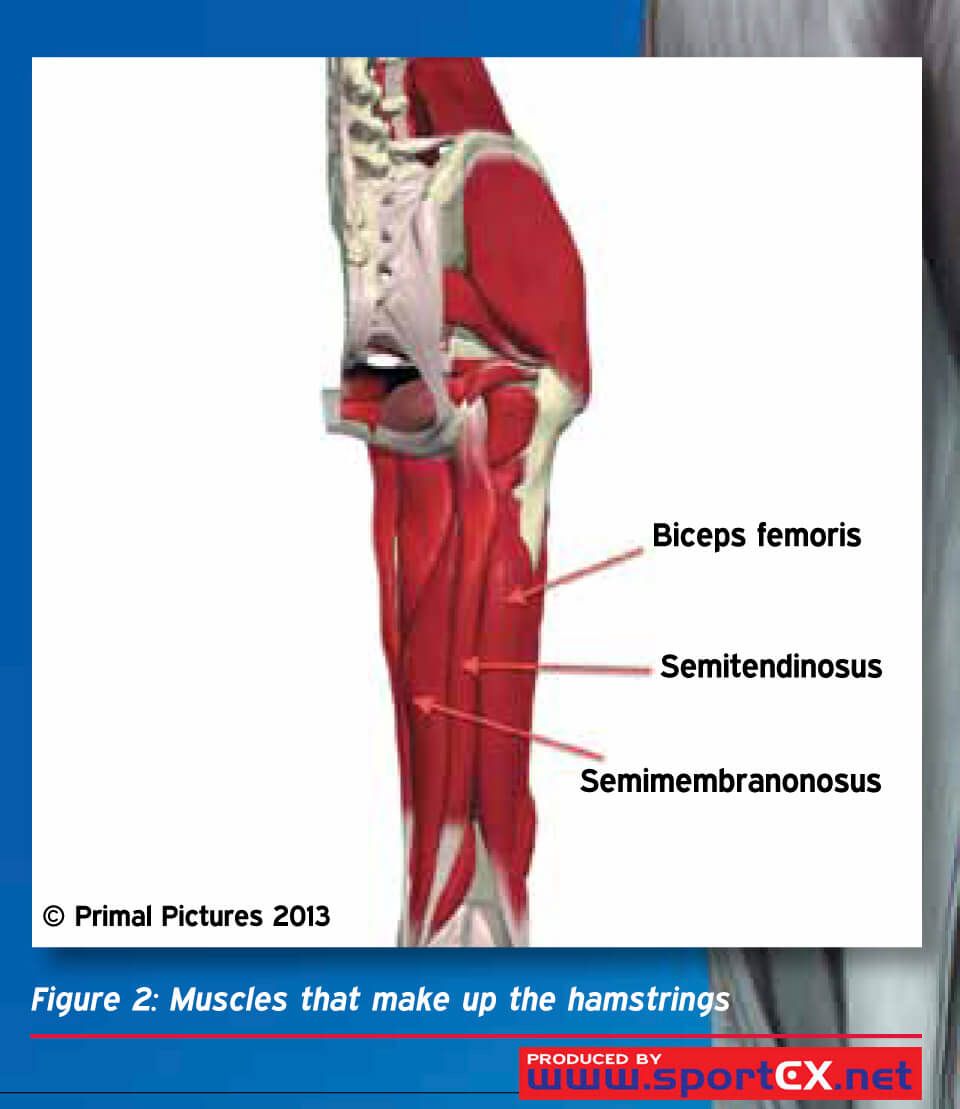 Via Sportex
Looking For More Help With Your Hamstrings?
Hamstring injuries are one of the most common soft tissue injuries in sports. They are especially challenging and frustrating due to the high recurrence rate. This is largely because people don’t appropriately rehab their injuries. It’s time to change the narrative and be proactive with taking care of your hamstrings! This program will expose your hamstrings in a safe and effective manner to prepare you for high-level activities! Learn more HERE!
What Should I Be Feeling During A Hamstring Stretch?
If you’re feeling a “stretch” in your lower leg or foot during a hamstring stretch, you are most likely experiencing neurogenic symptoms arising from the sciatic nerve. The sciatic nerve, the largest and longest nerve in the body, branches off of the lumbosacral plexus (L4-S3) near the hips and runs down the posterior thigh and leg all the way to the foot. Unlike muscles, nerves do not like to be stretched or tensioned. Instead, nerves are supposed to glide or slide within soft tissue nerve beds. Impaired neurodynamics or soft tissue restrictions limit nerve sliding and instead tension the nerve. This can generate symptoms of pain, numbness, and tingling, anywhere along the nerve’s sensory distribution.
Certain hamstring stretches, in particular, are very prone to tensioning the sciatic nerve. While knee extension and hip flexion stretch the hamstrings, this movement can also potentially tension the sciatic nerve, if neurodynamics is impaired and the rest of the body is not positioned properly. What is important to understand is certain positions at other joints, like the neck, hips, back, or ankle can place undesired, additional tension on the nerves in your legs. For instance, rounding your upper back while doing a perfect hamstring stretch could place additional tension on your sciatic nerve! Learn and be mindful of the particular joint positions outlined below while doing your hamstring stretches to ensure you aren’t placing excessive tension on your sciatic nerve if you're sensitive to neurogenic symptoms! However, it is important to note that the majority of individuals can handle small amounts of neural tension, but if your goal is to just stretch your hamstrings, then try to remove the neural tension out of the equation for now!
Tips and Tricks To Mastering The Hamstring Stretch
Learn How To Minimize Neural Tension
These movements below are what you should consider avoiding when performing proper hamstring stretching in order to minimize neural tension:
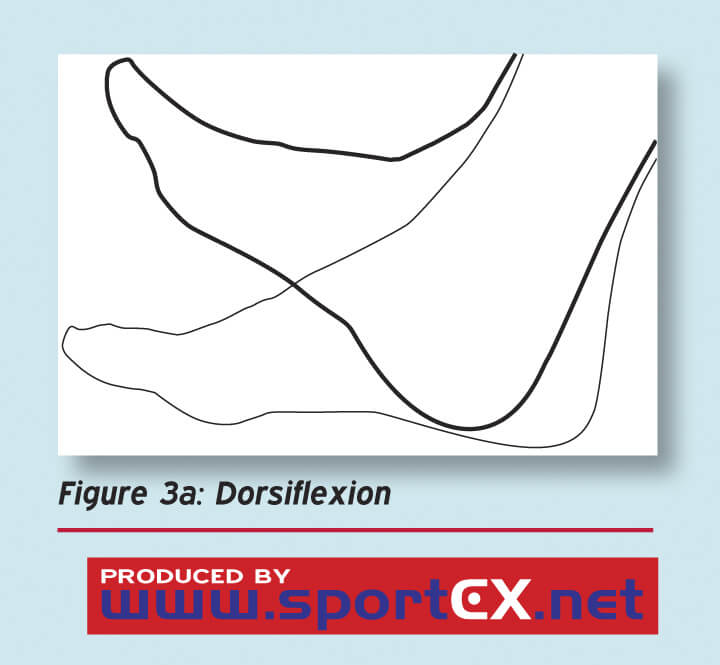
- Ankle dorsiflexion (pointing your foot up)
- Lumbar spine flexion (rounding your back)
- Cervical spine flexion (looking down)
- Hip adduction (bringing your leg towards the midline)
- Or hip medial rotation (turning your toes inwards).
Therefore, an optimal hamstring string stretch should only stretch the hamstrings, without excessive tension of the sciatic nerve. So, what’s the best way to properly stretch the hamstrings while minimizing as much neural tension as possible?
Proper Hamstring Stretching: Ankle Dorsiflexion
Hamstring strains are one of the most common soft tissue injuries in athletes. Moreover, the recurrence rates for these types of injuries are high, similar to ankle sprains. Although stretching both static and dynamic should be implemented into routine rehabilitation programs, there is much more that goes into a solid program to improve the health of your hamstrings as well as assist in any potential recurrence of the injury in the future. To learn more about hamstring strains as well as how you can overcome this injury, read our blog post below!
READ: WHAT TO KNOW ABOUT HAMSTRING STRAINS

Proper Hamstring Stretching Technique
Now that you understand what the hamstring muscles are and what neural tension is, we can now show you different ways to stretch the hamstrings! Follow along with the videos below that include descriptions below them for proper hamstring stretching! We go through various positions and types of stretches that you can replicate for proper hamstring stretching, including static stretching, dynamic stretching, and contract-relax!
Standing Hamstring Stretch With Leg Elevated

Sample Hamstring [P]rehab Program Exercise
- Raise your desired leg to be stretched on a slightly elevated surface. Keep your toes pointed down.
- Extend your knee, but keep a slight bend in it. You will still get a hamstring stretch through lengthening at the proximal end near the hip.
- Tuck your pelvic or anterior pelvic tilt. The hamstrings attach to the ischial tuberosity of the pelvis, therefore an anterior pelvic tilt will lengthen the hamstrings proximally--- Many times, just after these initial three steps, you will feel a good stretch in your hamstrings.
- To increase the stretch even more: While maintaining a neutral spine position, slowly lean forward to increase hip flexion until you feel a stretch. Do not lose the neutral spine position and slump forward, as this places large amounts of tension on your nerves!
***Throughout all these motions, be sure to avoid the above 4 joint positions that can cause excess tension the sciatic nerve: ankle dorsiflexion, lumbar spine flexion, cervical spine flexion, hip adduction or hip internal rotation.***
When properly stretching your hamstrings, you should only feel a stretch in your hamstrings. No “stretch-like sensations”, burning, numbness, or tingling anywhere else but your hamstrings at any time! If you are still experiencing neural symptoms with the above stretch, try pointing your towns down (ankle plantarflexion) and lookup (cervical spine extension). If balance or kinesthetic awareness is an issue, try the exact same stretch holding onto something for balance or on your back with the leg to be stretched elevated.
Standing Dynamic Stretch

Dynamic hamstring stretching is another great way to enhance the mobility of the hamstrings. Dynamic simply means that you are moving in and out of position, rather than holding it for a sustained amount of time, which would be a static stretch. Get set-up standing, feet shoulder-width apart, with the side you want to stretch - place the foot slightly in front of the other on an elevated surface. While maintaining a relatively flat back, neutral spine, and neutral foot position hinge at your hip and reach for your toes. Slowly come back to the starting position and repeat.
LISTEN: HOW MUCH SHOULD WE STRETCH?

Contract Relax At Wall

Sample Hamstring [P]rehab Program Exercise
This is an excellent way to stretch your hamstrings. The caveat to this is the positioning of the exercise, as you will have to get up and down from the floor. However, I look at this exercise and other exercises where individuals need to get up and down from the ground as a 'blessing in disguise so to speak. The reason being is that sometimes, individuals may have fear associated with movements or activities that are difficult for them. Patients will tell us frequently that they do not try to get down on the floor cause they "know" or are "scared" that they will not be able to get up. Overcoming barriers and fears of functional movements is a great way to improve your quality of life and give you the confidence to move the ways your body can!
Contract-relax is another great method to enhance the mobility of your hamstrings. Contract-relax is under the umbrella of proprioceptive neuromuscular facilitation. This method of stretching essentially "tricks" your body so that you can gain more range of motion at a particular muscle group, joint, etc. Start by lying on your back with one leg up on a wall or doorway. Push into the wall with your feet and contract your hamstring muscles for the prescribed amount of time and then relax. Feel the stretch in your hamstrings as you relax. After each rep, try to get a deeper stretch.
Take Control of Your Hamstring Health
What was your high school superlative? If the hamstrings had one it'd be most likely to be injured in the lower body. The good news is the hamstrings have reflected and want to change their ways to become the least likely to become injured. That happens with strength training geared at injury prevention!
Closing Thoughts
As discussed in this article, knowing the anatomy of your body and how your muscles work is a great way to enhance how you move overall! Key takeaways from this article are that the hamstrings muscle action is to flex the knee and extend the hip. In order to stretch, or lengthen that muscle group, simply do the opposite of those movements! Another key point is the influence of neural tension, and ensure you are intentional with the type of mobility exercise you are doing. There should NOT be a sensation of stretching all the way into the foot with hamstring stretching solely, because if so, you are also influencing neural tension. Be sure to avoid ankle dorsiflexion if you are JUST trying to stretch your hamstrings. A final key point is to find what works best for you with stretching for your hamstrings! There are many body positions and ways that you can stretch, and you can be successful with all of them.
About The Author
Michael Lau, PT, DPT, CSCS
[P]rehab Co-Founder & Chief Product Officer
 Michael was born and raised in Northern California but now currently resides in Sunny SoCal ever since attending the University of California, Los Angeles as an undergraduate majoring in physiology. After his undergraduate studies, he received his Doctorate in Physical Therapy from cross-town rival the University of Southern California. As a licensed physical therapist with a strong background in strength and conditioning, Michael likes to blend the realms of strength training and rehabilitation to provide prehab, or preventative rehabilitation, to his patients. A common human behavior is to address problems after they become an issue and far often too late, which is a reactionary approach. He believes the key to improved health care is education and awareness. This proactive approach-prehab-can reduce the risk of injuries and pain in the first place. He is a huge proponent of movement education and pain science. Clinically, he has a special interest in ACLR rehab and return to sport for the lower extremity athlete.