
Do I Need an X-Ray After an Ankle Sprain?
You just had a BAD ankle sprain. It's black and blue. It hurts like hell. How do you know that it's ONLY an ankle sprain, and not anything worse like a FRACTURE?! Well lucky for you, there's a quick and easy test you can do NOW to screen if you need an x-ray after an ankle sprain.
Learn How To Rehab After An Ankle Sprain!
Ankle Sprains
Ankle sprains are one of the most common athletic injuries. Not only just in athletics but also in activities of daily living. We are all human, things happen! Missing a step, stepping into a pothole, or twisting your ankle - next thing you know your ankle swells up like a balloon! Many are just minor ankle sprains and don't require any x-rays or surgical treatment. They often may look much worse than they actually are, but it is always smart to be thorough and receive a proper diagnosis from a trained healthcare professional. A comprehensive rehabilitation plan is all that's needed to gain back proprioception and stability in the ankle.
Have You Injured Your Ankle And Are Eager To Return To Activity?

This ankle sprain program has been designed for you to take ownership of your body and health. Lateral ankle sprains can be challenging and frustrating due to having the highest injury AND reinjury rate among any lower-body injury. The high reinjury rates are likely because most ankle sprains aren’t properly managed in the first place. It’s time to change the narrative with [P]Rehab - we’ve designed a solution for you to get back to normal life while protecting your ankles into the future! Learn more HERE!
There Also Can Be More Serious Injury With Ankle Sprains
However, in more serious injuries, there can also be fractures of the bones of the ankle and foot as well. Many times these injuries are a specific type of fracture called an avulsion fracture, in which the force on the ligament is so strong that it literally breaks off a portion of the bone with it (remember, ligaments attach bones to other bones).
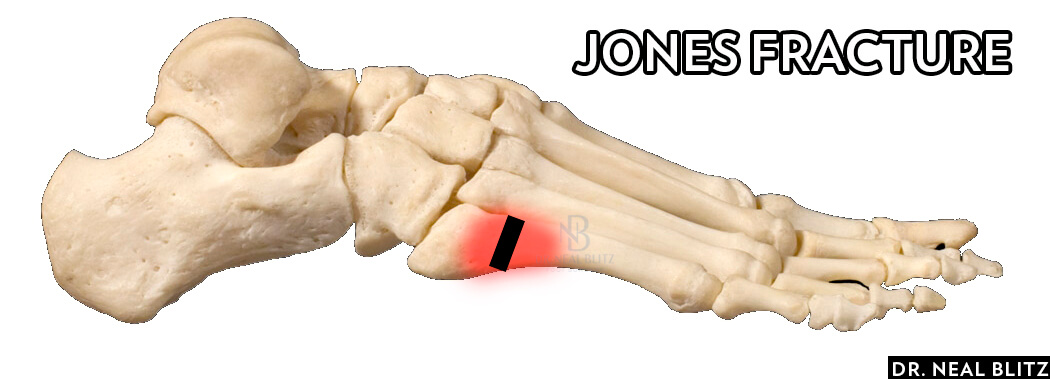
It's important to screen for these types of injuries because early weight-bearing is usually encouraged for minor ankle sprains; however, if there is a fracture, there needs to be a slight period of offloading or even immobilization - depending on the stability of the fracture. Furthermore, more serious fractures like Jones fractures (fracture of the base of the 5th metatarsal) need a longer period of immobilization or even surgery. This area receives less blood flow than other areas in the foot, and thus requires more rest/healing time and a more conservative rehab program from the beginning.
READ: WHAT YOU NEED TO KNOW ABOUT TISSUE HEALING
Do I Need an X-Ray After an Ankle Sprain? Use The Ottowa Ankle Rules
This battery of screening tests, called the Ottawa Ankle Rules, has an extremely high negative predictive value. What this means, is that if you CAN take 4 steps AND you DO NOT have tenderness in those specific areas, it almost certainly means YOU DO NOT HAVE AN ANKLE FRACTURE and thus you do not need to get an X-ray after an ankle sprain!
Now, if you CAN NOT take 4 steps or DO have tenderness in those areas, THAT DOES NOT NECESSARILY MEAN YOU HAVE A FRACTURE - it just means you should go to the ED and get an X-ray after an ankle sprain. The specificity (the ability of the test to determine if someone has a fracture) of the Ottawa ankle rules is low. It is simply a SCREENING test to RULE OUT if someone has an ankle fracture, not to RULE IN if you do indeed have an ankle fracture. It has a sensitivity of almost 100% I know this was a bit complicated…brings me back to statistics 101 in college.
Ultimately, this is not medical advice and if you're concerned you should follow up with your medical profressional.
A Summary Of The Ankle X-ray Screening Questions
- Can you take 4 steps (it's okay if need to limp)? NO? --> GET AN XRAY
- Do you have tenderness/pain around your medial or lateral malleoli (the little bone bumps on either side of your ankle)? Specifically the backside of the bones? YES? --> GET AN XRAY
- Do you have tenderness/pain around the base of the 5th metatarsal (bump on the lateral/outside portion of your foot; halfway between your heel and your little toe)? YES? --> GET AN XRAY
- Do you have tenderness/pain around the navicular bone (bump on the medial/inside portion of your foot?) YES> --> GET AN XRAY
LISTEN: LIVING WELL WITH LYMPHEDEMA

Swelling is inevitable after any type of ankle injury. A potential complication of prolonged swelling in the development of lymphedema. Listen to our [P]Rehab Audio Experience with Taryn Everett, as we dive into the topic of how to live well with lymphedema!
So What Happens If I Have A Fracture?
If you didn't make out so lucky and ended up sustaining a fracture to your ankle, the prognosis is still good for these injuries! Depending on the extent of the fracture, surgery may or may not be indicated. For instance, if you sustained a very small, hairline fracture that is non-displaced, in most instances, you will NOT have to have surgery! You simply will be in a cast or a boot to protect the fracture, allowing the bone to heal, followed by specific rehabilitation to regain your foot and ankle function. On the other hand, if you sustained a more serious injury that led to a larger, potentially displaced fracture, surgery may be indicated. We have an entire blog article on the topic of what to do after an ankle fracture that you can read below!
READ: WHAT TO DO AFTER AN ANKLE FRACTURE
Closing Thoughts
Ankle sprains are very frequent and oftentimes are treated conservatively. The quick swelling and pain as well as difficulty with walking may have you fearing the worst: a fracture. Luckily, the Ottawa Ankle Rules are a highly effective, quick, evidence-based screening tool that can save you the energy, time, and money of avoiding an X-Ray! It is always smart to receive a proper evaluation and diagnosis from a trained healthcare professional who can outline the best road to recovery for you specifically while also ensuring you receive the correct diagnosis!
Make A Full Return To Activity On Your Own Terms
Ankle sprains can be scary and to add fuel to the uncertainty fire there is a lot of misguided information about treating it. We are here to set the record straight because the best treatment is not complete rest, but rather early safe and protected movement. What is done in the initial phases of injury plays a role in the long-term outcome. The goal is that you regain confidence in your ankle's ability to support movement and generate higher levels of force needed for walking, climbing stairs, and running.
About The Author
Michael Lau, PT, DPT, CSCS
[P]rehab Co-Founder & Chief Product Officer
 Michael was born and raised in Northern California but now currently resides in Sunny SoCal ever since attending the University of California, Los Angeles as an undergraduate majoring in physiology. After his undergraduate studies, he received his Doctorate in Physical Therapy from cross-town rival the University of Southern California. As a licensed physical therapist with a strong background in strength and conditioning, Michael likes to blend the realms of strength training and rehabilitation to provide prehab, or preventative rehabilitation, to his patients. A common human behavior is to address problems after they become an issue and far often too late, which is a reactionary approach. He believes the key to improved health care is education and awareness. This proactive approach-prehab-can reduce the risk of injuries and pain in the first place. He is a huge proponent of movement education and pain science. Clinically, he has a special interest in ACLR rehab and return to sport for the lower extremity athlete.